
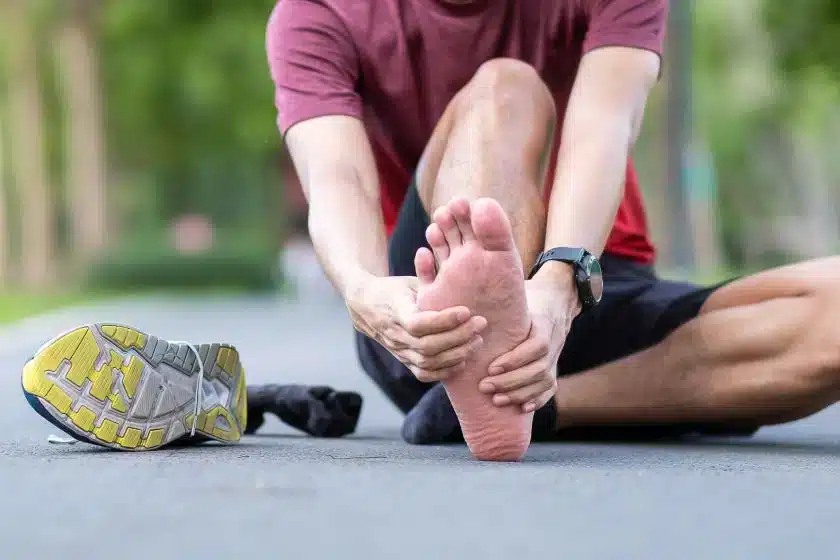
Imagine this.
You get out of bed, place your feet on the floor, and the first steps toward the bathroom feel like you are walking on a bruised stone under your heel.
You ease into the day, and the pain settles a little once you are moving.
Later, after sitting to read, drive, or watch TV, those first few steps hurt again.
If that sounds familiar, you are not alone. Many active adults over 50 notice this pattern and quietly hope it will disappear. Often it does not – at least not without some help and a plan.
For many people, this pattern of heel pain is linked to plantar fasciitis.
What is plantar fasciitis, in simple terms?
The plantar fascia is a strong, fibrous band running along the bottom of your foot from your heel to your toes.
It helps support your arch and acts like a spring when you walk, run, or climb stairs.
Plantar fasciitis happens when this tissue becomes irritated or overloaded.
Over time, tiny micro-tears can build up faster than your body can repair them.
This irritation often shows up as sharp or aching pain under the heel, especially with your first steps after rest.
According to reputable health sources, many adults will experience plantar fasciitis or related heel pain at some point in their lives. Some U.S. estimates suggest that around 1 in 10 people will have heel pain linked to plantar fasciitis during their lifetime.
Why plantar fasciitis often appears after 50
Not everyone with plantar fasciitis is a runner.
In fact, many people first notice it in their 50s, 60s, or beyond – often when they are trying to stay active through walking, gardening, golf, or looking after grandchildren.
Let us look at some common reasons.
1. Natural changes in your tissues with age
As we age, the tissues in our feet change.
The plantar fascia and surrounding structures can become slightly less elastic.
The natural fat pad under the heel that helps absorb shock may thin a little.
These small changes can mean the same amount of walking or standing that felt fine at 40 may start to irritate the heel at 60.
2. Being active on hard surfaces
Many active adults spend long periods on hard floors – in the kitchen, workshop, or at work.
Repeated loading on concrete or tile, especially with less supportive shoes or slippers, can gradually irritate the plantar fascia.
You might not notice it on any single day, but the effect builds over months.
3. Sudden changes in your routine
The body likes gradual change.
Common patterns we see include:
- Deciding to walk much more for fitness or weight loss
- Taking up a new hobby that involves standing
- Doing more intense yard work or DIY over a weekend
If your feet are not used to that extra load, the plantar fascia can become irritated.
4. Foot mechanics and posture
Everyone’s feet are shaped differently.
Some people naturally roll in (pronate) more, while others have higher, stiffer arches.
Neither is “bad” on its own, but certain patterns can place more strain on the plantar fascia, especially when combined with hard floors, longer walks, or less supportive footwear.
5. Overall health and body weight
Carrying extra body weight can increase the load on the feet with every step.
Health conditions such as diabetes, arthritis, or reduced ankle mobility can also change how weight is distributed through the foot.
These factors do not guarantee you will get plantar fasciitis, but they can make the tissue more sensitive to overload.
How plantar fasciitis feels day to day
Everyone’s experience is a little different, but many people describe a similar pattern.
Typical symptoms people notice
- Sharp or stabbing pain under the heel with the first steps in the morning
- Pain after sitting, then standing up to walk
- Aching or burning along the arch after longer walks or standing
- Pain that can ease slightly once you “warm up,” then return later in the day
Some people feel like they are walking on a stone or nail under the heel.
Others describe a tight pulling sensation along the arch.
When it might not be plantar fasciitis
Not all heel pain is plantar fasciitis.
Other conditions can cause similar discomfort, such as nerve irritation, stress fractures, or issues coming from the lower back.
If your pain is severe, constant at rest, associated with numbness, or linked with significant swelling or redness, it is important to seek professional assessment to understand what is going on.
Small, steady steps that can help calm heel pain
Gentle, consistent habits often make a bigger difference than drastic changes.
These ideas are general and should be adapted to your comfort level.
If anything makes your pain sharply worse or stays worse the next day, it is best to stop and seek professional guidance.
1. Respect your pain signals
Pain is information, not a failure.
Try to notice:
- Which activities flare your heel pain
- How long it takes to settle
If a particular walk, hill, or standing task always sets things off, you may need to reduce or break up that activity for a period while you work on strengthening and mobility.
2. A gentle morning routine for your feet
Before your first steps, try a short, gentle routine at the edge of the bed or in a chair:
- Ankle circles: Slowly circle each ankle 10 times in each direction.
- Toe curls: Gently curl and stretch your toes 10 to 15 times.
- Calf stretch: With a towel or belt around the ball of your foot, gently pull your toes toward you and hold for 15 to 20 seconds, staying within a comfortable stretch.
These simple movements can help wake up the tissues before they take your full body weight.
3. Support your feet through the day
Where possible, aim for footwear that feels supportive and cushioned under the heel.
Many people notice their heel pain is worse when walking barefoot on hard floors for long periods.
When you can, try to:
- Use supportive shoes indoors, especially on tile or concrete
- Avoid long periods standing completely still
- Break up tasks with short seated breaks or easy walking breaks
4. Pacing your activity instead of stopping completely
It can be tempting to stop walking or exercising altogether when your heel hurts.
For most people, a better approach is to adjust the amount and type of activity rather than giving it up.
You might:
- Shorten your walks slightly but do them more often
- Choose softer surfaces, like grass or track instead of concrete
- Alternate walking days with lower-impact activities, like cycling or gentle mobility work
Gentle, consistent motion supports lifelong mobility and often helps the plantar fascia adapt and heal more comfortably.
5. Evening care and recovery
At the end of the day, a few minutes of care can help calm your heel.
Some people find relief from gently rolling the sole of the foot over a small ball or bottle for a few minutes, staying within comfort.
Calf and foot stretches, held gently for 20 to 30 seconds, can also help maintain flexibility around the ankle and arch.
How therapy can help plantar fasciitis and heel pain
ou do not have to figure this out alone.
Physiotherapists work with plantar fasciitis and heel pain regularly, and a tailored plan can make your progress more predictable and less frustrating.
At Active Motion Injury Clinic, led by Jordan Sahota, support for plantar fasciitis typically includes:
1. A thorough assessment
Your therapytherapist will:
- Listen to your story – when the pain started, what makes it better or worse, and your activity goals
- Examine your foot, ankle, and calf flexibility and strength
- Look at how you walk and stand
This helps identify what is overloading your plantar fascia and which small changes may help the most.
2. Hands-on techniques to settle irritation
Depending on your needs, your therapytherapist may use gentle, hands-on techniques to help reduce stiffness and sensitivity in the foot and lower leg.
The aim is to support comfort and improve movement so that exercises and daily activities feel easier over time.
3. Targeted exercises
Specific exercises are one of the most important parts of long-term improvement.
Your plan may include:
- Calf stretches and strengthening
- Exercises to support the arch and intrinsic foot muscles
- Hip and leg strength work to improve overall alignment and loading
These are introduced gradually and adjusted as your pain and strength change.
4. Practical advice tailored to your life
A key part of therapy is making your plan realistic.
For example, if you enjoy long countryside walks, your therapytherapist can help you:
- Decide how far to walk while your heel settles
- Plan rest days and recovery strategies
- Adjust your pace, surfaces, or inclines
Small, steady habits make meaningful change, especially when they fit your real life.
For more information about how Active Motion Injury Clinic approaches this condition, you can visit: https://activemotioninjuryclinic.co.uk/plantar-fasciitis/
When to seek professional help for heel pain
It is a good idea to reach out to a therapytherapist or healthcare professional if:
- Heel pain has lasted more than a few weeks and is not improving
- Pain is affecting your sleep, mood, or ability to stay active
- You find yourself avoiding activities you enjoy because of your heel
You should seek urgent medical advice if you notice:
- Sudden, severe heel pain after a specific injury
- Significant swelling, redness, or warmth in the foot
- Numbness, tingling, or weakness in the foot or leg
Getting the right assessment early can help you avoid months of guessing and stop the pain from becoming a long-term limitation.
What to expect from a visit at Active Motion Injury Clinic
Many people feel nervous before their first appointment, especially if the pain has been going on for a long time.
At Active Motion Injury Clinic, our aim is to create a calm, reassuring space where you feel listened to and understood.
A typical visit for plantar fasciitis or heel pain may include:
- Conversation: understanding your goals, concerns, and daily responsibilities
- Movement assessment: observing how you walk, stand, and move
- Hands-on evaluation: gently testing the foot and ankle to identify sensitive areas
- Plan together: agreeing on simple steps you can start right away
Our focus is on expert guidance and real progress, using practical strategies you can apply every day.
If you would like to explore whether therapy could help your heel pain, you can Book your Free DV (discovery visit) to talk through your situation and ask questions.
Book your Free DV or call 07368286175 to arrange a convenient time.
Frequently asked questions about plantar fasciitis and heel pain
“Will plantar fasciitis go away on its own?”
For some people, heel pain does gradually improve, especially if they naturally reduce aggravating activities.
However, it can also linger for many months if the underlying stresses are not addressed.
Supportive exercises, activity adjustments, and therapy can help guide the healing process and reduce the risk of the pain becoming a long-term issue.
“Is walking good or bad for plantar fasciitis?”
Walking itself is not “bad,” but the amount and type of walking matters.
For many people, a carefully adjusted walking routine – with the right footwear and surfaces – is an important part of recovery.
Your therapytherapist can help you decide how much walking is appropriate at each stage so that you stay active without continually flaring your pain.
“Do I have to stop all my activities?”
In most cases, you do not need to stop everything.
Instead, the goal is usually to find a balance where the plantar fascia can calm down while you stay as active as possible.
This often means modifying intensity, duration, or frequency rather than giving up the activities you enjoy.
“How long does recovery usually take?”
Recovery time varies.
Some people notice clear improvements in a few weeks; others need several months of steady work, especially if the pain has been present for a long time.
Having a guided plan, and adjusting it as you progress, often leads to more predictable and sustainable improvement.
Moving forward: gentle steps toward more comfortable movement
Living with heel pain from plantar fasciitis can be frustrating.
It can slowly chip away at your confidence, independence, and enjoyment of simple activities like walking the dog or meeting friends.
The good news is that with understanding, patience, and the right support, many people move back toward comfortable, active lives.
At Active Motion Injury Clinic, we believe that understanding your body is the first step to lasting comfort.
If you are ready to explore calm, practical ways to ease your heel pain and stay active after 50, we are here to help.
Book your Free DV or call 07368286175 to start a conversation.
You do not have to face heel pain alone.
Information only, not a substitute for professional advice. Always consult a qualified healthcare professional for assessment and personalized guidance about your specific situation.