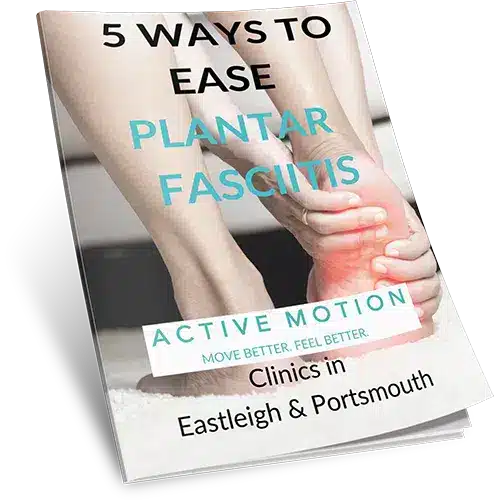



Get Your Free Plantar Fasciitis Report!
Active Motion Injury Clinic provides specialist treatment for plantar fasciitis in both Portsmouth and Eastleigh as well as the surrounding areas*. Also known as policeman’s heel, plantar fasciitis is one of the most common and most frustrating foot conditions we treat. With the right personalised programme, the vast majority of our patients make a full recovery.
5.0 ★★★★★ | Trusted by thousands of patients across Hampshire
*surrounding areas: Romsey, Southampton, Chandlers Ford, Winchester, Waterlooville, Chichester, Emsworth, Peterfield
Plantar fasciitis is inflammation of the plantar fascia, the thick band of tissue running along the bottom of the foot connecting the heel to the toes. It typically causes sharp, stabbing heel pain, worst first thing in the morning or after periods of rest. (Although we do see a lot of patients with arch pain or symptoms with and without heel pain)
Plantar fasciitis is one of the most common causes of heel pain, affecting approximately 10% of the population at some point in their lives (Buchbinder, 2004, New England Journal of Medicine). It is particularly common in runners, people who stand for long hours, and those aged 45 and over.
Reference: Buchbinder R (2004). Plantar fasciitis. New England Journal of Medicine, 350(21), 2159-2166.
If you’re not quite ready to book an appointment yet and have some questions you would like answered first, click the link below to complete a form to get the conversation started.
We begin with a thorough assessment of your foot, gait, and lower limb mechanics. Plantar fasciitis is rarely just a foot problem. Tightness in the calf, poor hip stability, or biomechanical imbalances elsewhere in the body often contribute to the load on the plantar fascia.
As well as:
How long does plantar fasciitis take to heal?
With the right treatment, most people see significant improvement within 6 to 12 weeks. Without addressing the underlying cause it can persist for months or even years. Early treatment gives you the best chance of a quick recovery.
Is rest the best treatment for plantar fasciitis?
Rest alone is rarely the answer. While reducing aggravating activities helps in the short term, it does not address the tightness and weakness that caused the problem. Targeted exercises and hands-on treatment are far more effective. With the right treatment plan, full rest is not required. However, we will discuss how to load your foot appropriately without having to stop the activities you love.
What makes plantar fasciitis worse?
Walking barefoot on hard floors first thing in the morning, prolonged standing, large increases in activity, and unsupportive footwear can all aggravate symptoms. We will give you specific advice on managing day-to-day activities during recovery.
Can shockwave therapy help plantar fasciitis?
Yes. Shockwave therapy is one of the most effective treatments for stubborn plantar fasciitis, particularly in cases that have not responded to other approaches. It stimulates the body’s natural healing response in the affected tissue. We offer this at both our Portsmouth and Eastleigh clinics.
How much does each session cost for plantar fasciitis?
We offer a FREE consultation to ensure that we can help you. After hearing more about what you are currently suffering with and answering any questions you may have. A qualified practitioner will put together a tailored plan for you. The number of sessions will depend on a number of factors such as the duration of symptoms and their history.