Golf Injury Treatment and Performance In Portsmouth and Eastleigh
Active Motion Injury Clinic is Hampshire’s specialist golf injury clinic, serving golfers across Portsmouth, Eastleigh, and the surrounding areas*. We offer a dedicated 12-step golf assessment and swing analysis, going far beyond the general sports therapy most golfers settle for, to identify exactly what is causing your pain and what is holding back your performance.
5.0 ★★★★★ | Trusted by thousands of patients across Hampshire
*surrounding areas: Romsey, Southampton, Chandlers Ford, Winchester, Waterlooville, Chichester, Emsworth, Peterfield
Click The Video Below To Learn How We Can Help Fix Your Golf Injury!
Golf Injuries Are More Common Than You Think
Golf places repetitive, high-load demands on the spine, hips, shoulders, elbows, and wrists. Most golfers manage discomfort for longer than they should before seeking help, trying rest and ice and playing fewer holes, only to find the problem returns the moment they get back on the course.
Research suggests that up to 62% of amateur golfers experience a golf-related injury at some point, with the lower back the most frequently affected area (McHardy et al., 2007, Sports Medicine).
Reference: McHardy A et al. (2007). Golf-related lower back injuries: a review of the literature. Journal of Chiropractic Medicine, 6(4), 135-143.
- Lower back pain: the most common complaint among golfers of all levels, often driven by limited hip rotation or poor swing mechanics</li.
- Golfer’s elbow (medial epicondylalgia): inner elbow pain caused by grip and impact forces
- Tennis elbow (lateral epicondylalgia): outer elbow pain, frequently misdiagnosed in golfers
- Rotator cuff injuries: shoulder pain from the repetitive overhead and follow-through motion
- Wrist and hand injuries: including tendinopathies and ligament strains from impact
- Hip pain: from limited rotation leading to compensatory loading through the lower back
- Knee pain: often caused by poor hip mobility forcing excessive rotation through the knee
- Neck pain: from the rotational demands of the swing and prolonged address position
Our Specialist Golf Assessment
Unlike general sports therapists who treat golfers but do not specialise in the sport, we have developed a dedicated golf-specific service built around the unique demands of the game. Our 12-step golf assessment covers:
- Full movement screening from the ground up: feet, ankles, knees, hips, spine, and shoulders
- Swing analysis: identifying technique faults that are contributing to your injury or limiting your performance
- Rotational mobility assessment: the most important physical factor in golf performance and injury risk
- Hip and thoracic spine mobility testing: the most common physical limitations in recreational golfers
- Wrist and hand assessment: for grip-related or impact-related injuries
- Posture and address position evaluation: identifying how your setup may be contributing to your symptoms
Request A Call Back from a Therapist
If you’re not quite ready to book an appointment yet and have some questions you would like answered first, click the link below to complete a form to get the conversation started.

Why Golf Is More Than Just a Sport
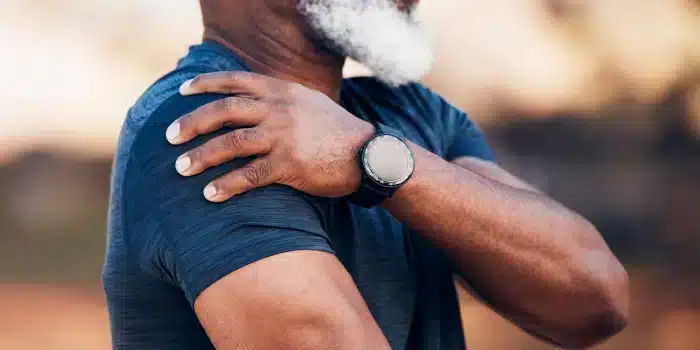
We understand that golf is rarely just about the score. For many of our patients, particularly those who have been playing for decades, golf is a social lifeline. The camaraderie in the clubhouse after a round, the routine of walking the course, the independence and mental stimulation it provides are things that genuinely affect quality of life when they are taken away by injury.
When golfers are forced to stop, they often lose far more than their handicap. That is why we take golf injuries seriously and why we have made it a clinical specialism rather than an afterthought.
Golf Injury FAQs
Do I need to stop playing while receiving treatment?
Not necessarily. In many cases we can modify your practice and play to keep you on the course during treatment. We will advise you specifically on what to avoid and what is safe to continue.
My back pain only comes on during or after golf. Is that still worth treating?
Absolutely. Activity-specific pain is a strong signal that something is being loaded incorrectly during your swing. This is exactly what our golf assessment is designed to identify. Treating it early prevents it from becoming a chronic problem.
Can you help me hit the ball further as well as fix my injury?
Yes. Improved mobility, strength, and swing mechanics do not just reduce injury risk. They also improve power and consistency. Many of our patients find their game genuinely improves as part of their rehabilitation.
I have had cortisone injections that have not worked. Can you still help?
Yes. Cortisone injections address inflammation temporarily but do not correct the underlying mechanical cause. Our assessment identifies the root problem, often a mobility deficit or loading issue, and addresses it directly.
Do you see golfers of all ages and abilities?
Yes. From club beginners to scratch golfers and everyone in between. We work with golfers in their 30s through to their 80s.
How much does each session cost for Golf Injuries?
We offer a FREE consultation to ensure that we can help you. After hearing more about what you are currently suffering with and answering any questions you may have. A qualified practitioner will put together a tailored plan for you. The number of sessions will depend on a number of factors such as the duration of symptoms and their history.