
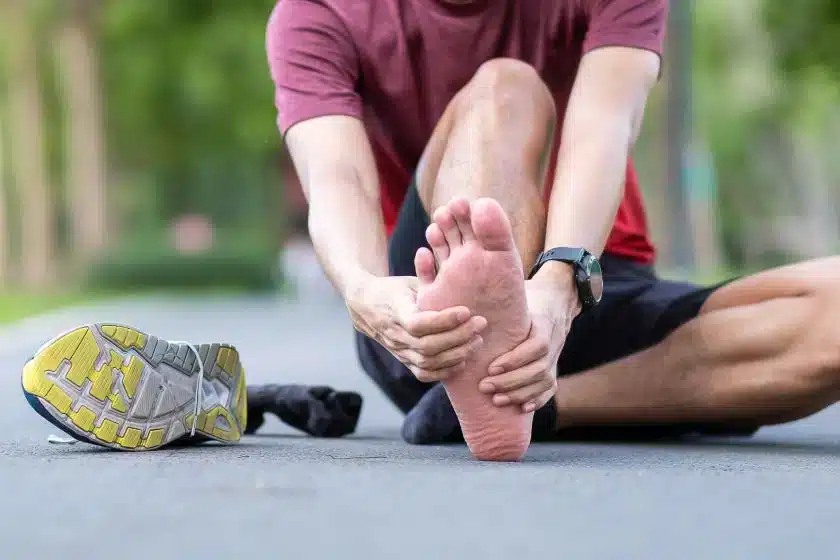
Plantar fasciitis is usually caused by doing more than your heel tissues can comfortably handle. Exercises are important, but on their own they often miss the bigger picture of load management, footwear, and daily habits. A combined approach with expert guidance, hands-on care, and gradual changes tends to work best.
What is plantar fasciitis?
Plantar fasciitis is one of the most common causes of pain under the heel. It involves irritation of the plantar fascia, a strong band of tissue that supports the arch of your foot. People usually notice a sharp, pulling, or aching pain on the bottom of the heel, especially with the first steps in the morning or after sitting.
Typical symptoms include:
- Sharp heel pain in the morning
- Pain in the heel after sitting or resting
- Discomfort when walking or standing for long periods
- Tightness in the sole of the foot or calf
The plantar fascia helps absorb and transfer load every time you stand, walk, or run. When it is repeatedly stressed beyond what it can comfortably handle, tiny micro-irritations can build up. Over time, this can lead to persistent heel pain that can limit walking, exercise, and daily activities.
According to reputable health sources, plantar heel pain affects a significant number of adults, especially people who spend long hours on their feet or are very active. The good news is that most cases improve with the right combination of care. Gentle, consistent motion supports lifelong mobility when it is matched to what the tissues can tolerate.
Why heel pain happens: load vs capacity
To understand why your heel pain isn’t improving, you need to understand one key concept:
- Load = how much stress you put through your foot, whether that be via walking, running, standing, steps. Etc.
Capacity = what your plantar fascia and surrounding muscles can safely tolerate. Capacity is influenced by strength, flexibility, recovery, footwear, previous injuries, and overall health.
Plantar fasciitis often develops when load suddenly increases faster than capacity can adapt. This might look like starting a new running program, adding extra shifts on your feet, or rapidly increasing your daily step count. Sometimes, it even appears when you change shoes or surfaces without realizing how much extra load that adds.
Why exercises alone often don’t fix plantar fasciitis
You may have tried heel stretches or foot strengthening from the internet and found that your pain never fully settles. This can be frustrating and may make you feel like nothing works. But in many cases, the exercises themselves are not the problem – they are just only one piece of the puzzle.
There are three common reasons exercises alone fall short:
- The exercises are not matched to your current capacity. If they are too easy, they do not build strength.. If they are too hard or done too often, they may keep the area irritated.
- Load outside of exercise is not adjusted. You might be doing great exercises, but still standing all day, walking long distances, or running through pain. The plantar fascia never gets a true chance to calm down.
- Other contributing factors are missed. Footwear, daily habits, stiffness in the ankle or calf, and even how you move at your hips and knees can all affect heel load. Ignoring these can limit how far exercises can take you.
Exercises are powerful tools when they sit inside a bigger plan. When combined with smart load management and hands-on support, they tend to be far more effective for long-term comfort.
The missing piece: load management
Load management means adjusting how much stress your heel is under day-to-day so it can settle down, then gradually handle more again. It does not mean doing nothing or stopping all activity. Instead, it is about finding your current “sweet spot” where you can stay active without constantly flaring the pain.
A Therapist can help you:
- Identify activities that spike your pain and find ways to modify them
- Set temporary limits around steps, running distance, or standing time
- Plan a gradual progression to safely increase your activity again
For example, if your pain is worst after long walks, you might:
- Reduce the distance slightly for a few weeks
- Break walks into shorter, more frequent bouts
- Add specific strengthening exercises on the same days to rebuild capacity
This balance of reducing aggravating loads while slowly building strength is often where real progress happens. It lets you keep moving, but in a way your heel can tolerate.
Other key factors: footwear and daily habits
Footwear choices
- Shoes can significantly change how much strain goes through the plantar fascia. Very flat, unsupportive, or worn-out shoes can increase stress on the heel. Sudden changes to minimal footwear or very hard soles can also overload the tissues.
- Supportive, cushioned shoes that fit well and match your activity often help. Many people with plantar fasciitis feel better when they avoid going barefoot on hard floors, especially first thing in the morning. Wearing supportive shoes indoors for a period of time can reduce those painful first steps.
Daily habits that quietly add load
Some everyday patterns can keep your heel irritated without you realizing:
- Standing in one spot for long periods
- Climbing lots of stairs at home or work
- Spending hours on hard surfaces like concrete
- Rapidly increasing your weekly step count or running mileage
Small changes, like sitting when you can, planning breaks, or varying your routes and surfaces, can ease pressure on the plantar fascia. Gentle, consistent motion – not all or nothing – supports healing.
What actually works: a combined approach
Research and clinical experience both suggest that a combined approach works best for most people with plantar fasciitis. This usually includes:
Individualized exercise program
Targeted strengthening and stretching can improve how the foot and lower leg share load. Common focus areas include the calf muscles, intrinsic foot muscles, and sometimes the hip and glute muscles. The key is that exercises are tailored to your pain level, strength, and goals, then progressed over time.
Hands-on treatment
Hands-on treatment can help reduce pain and improve mobility around the heel and ankle. This may include soft tissue techniques, joint mobilization, and taping to temporarily reduce strain on the plantar fascia. Manual treatment is not usually a stand-alone answer, but it can make it easier to move, exercise, and build capacity.
Load management and education
Understanding what is driving your pain is powerful. Education about load vs capacity, pacing, and realistic timelines helps you make more confident choices day to day. This often reduces worry and makes it easier to stick with your plan.
Footwear and activity planning
Discussing your shoe choices, work demands, and sports goals allows your plan to reflect your real life. That way, you are not just doing exercises in isolation, but adjusting the environment your heel lives in. Move comfortably. Live actively.
Tips for managing heel pain day to day
Everyone is different, but many people with plantar fasciitis find these strategies helpful:
- Respect your pain signals. Some discomfort with activity can be okay, but sharp, rising, or lingering pain is a sign to ease back.
- Use activity pacing. Break longer walks, runs, or tasks into smaller blocks with rests. This keeps you moving without overwhelming the tissues.
- Keep gentle movement going. Completely avoiding weight bearing for long periods can make the heel more sensitive. Light, tolerable movement helps circulation and keeps the area from stiffening.
- Consider short bouts of ice after heavier days. Doing this for 10 to 15 minutes can help reduce soreness for some people. Avoid placing ice directly on the skin.
- Wear supportive shoes indoors. Especially in the morning or when symptoms flare, supportive shoes instead of bare feet on hard floors can ease pain.
- Work on strength gradually. Simple, comfortable exercises recommended by a Therapist can help rebuild capacity. Progress them slowly over weeks, not days.
When to get help
It is sensible to seek professional help if:
- Your heel pain has lasted longer than a few weeks and is not improving
- Pain is affecting your sleep, work, or ability to stay active
- You are unsure which exercises are right for you
- You have tried online routines without much progress
A specialist therapist can assess how your foot, ankle, and whole lower limb move. They can help identify what is overloading your plantar fascia and design a plan that fits your life, not just a generic checklist. Expert guidance, real progress.
If your heel pain is not improving, the problem is usually not that you are “not doing enough” — it is that the right things are not being done in the right way, at the right stage of recovery.
Start Your Journey Towards More Comfortable Movement:
Book a FREE 30-minute advice session today.
This is a chance to:
- Understand what may be driving your heel pain
- Ask questions about your symptoms and recovery
- Explore a calm, step-by-step plan to help you move more comfortably again
Small, steady habits make meaningful change. Taking the first step now can help you build a stronger, more confident future.
Request a Free Consultation here or Request a Free Call Back here
📞 Call us or 📧 send a message to get started in Eastleigh, Portsmouth, or Salisbury.
Written by Jordan Sahota
Director at Active Motion Injury Clinic
Previously a Senior Lecturer at The University of Winchester
Radio 4 Inside Health Interview
Podcast Interview with Paul Gough
This article is for educational purposes only and is not a substitute for medical advice. If your symptoms are severe, worsening, or unusual, please seek advice from a qualified healthcare professional.