There is a point where discomfort stops feeling simple.
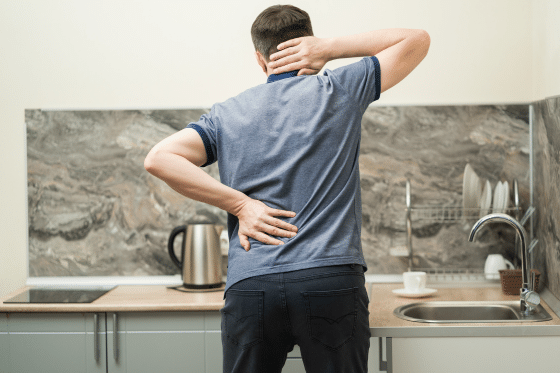
What may have started as a tight or stiff lower back begins to change. You notice sensations moving into your hip. Then perhaps into your leg. It might feel like a dull ache one day, a sharper sensation the next or even tingling or numbness that comes and goes.
For many people, this shift raises concern.
It no longer feels like just back pain.
This is where the conversation around back pain and sciatica becomes important. Not just in terms of labels, but in understanding what your body is telling you and how to respond in a way that supports long term recovery.
If you are searching for answers around back pain and sciatica, this guide will help you make sense of why symptoms travel, why they fluctuate and what you can do to move forward with confidence.
Why Symptoms Do Not Always Stay in One Place
One of the most confusing aspects of sciatica is how symptoms move.
You may feel discomfort in your lower back in the morning, then notice it shift into your hip or down your leg later in the day. Sometimes it settles in one area, only to return somewhere else.
This can make it feel unpredictable.
However, there is usually a reason behind it.
The body responds to position, movement and load throughout the day. As these change, the way your body experiences discomfort can also change. This is particularly relevant when a nerve is involved.
The sciatic nerve runs from your lower back through your hip and down your leg. When it becomes more sensitive, it can create sensations anywhere along that pathway.
This is why you might notice:
- Discomfort in the lower back that spreads into the glute or hip
- A pulling or tight feeling down the back of the leg
- Tingling or altered sensation in the calf or foot
- Symptoms that shift depending on how you sit, stand or move
The key point is that where you feel it is not always where it starts.
Why Sitting Often Makes Things Worse
Many people with back pain and sciatica notice that sitting is one of the most aggravating positions.
This is because sitting changes the way pressure is distributed through your lower back and hips. It can also influence how the sciatic nerve is positioned and how surrounding structures respond.
Long periods of sitting may lead to:
- Increased stiffness in the lower back
- Greater sensitivity along the nerve pathway
- A feeling of tightness or pressure in the hip
- More noticeable symptoms in the leg
This is why discomfort often builds throughout the day, especially if your routine involves prolonged sitting.
It is not just about posture.
It is about how long your body remains in one position without variation.
The Role of Movement in Symptom Changes
Movement has a significant impact on how symptoms present.
Some movements may feel relieving, while others may feel more challenging. This does not mean one is good and the other is bad. It simply reflects how your body is responding at that moment.
For example:
- Gentle walking may help reduce stiffness
- Certain positions may ease pressure on the nerve
- Other movements may temporarily increase sensitivity
Understanding how your body responds to different types of movement is an important part of the process.
It helps guide what to do more of and what to modify.
Why Symptoms Can Fluctuate Day to Day
Another common frustration is inconsistency.
You may feel better one day, only to notice symptoms return the next. This can make it difficult to feel like you are making progress.
However, fluctuations are a normal part of recovery.
Your body is constantly adapting to the demands placed on it. Factors such as activity levels, posture, sleep and stress can all influence how symptoms present.
This means:
- A good day does not mean the issue has completely resolved
- A more challenging day does not mean things are getting worse
- Progress is often non linear
Recognising this can help reduce the frustration that comes with ups and downs.
The Difference Between Irritation and Damage
When symptoms travel into the leg, it is easy to assume something serious is happening.
In many cases, what you are experiencing is irritation or increased sensitivity rather than significant damage.
The nervous system is highly responsive.
When it becomes more sensitive, it can amplify sensations and create discomfort in response to movements or positions that would not normally be an issue.
This does not mean your body is fragile.
It means it is being protective.
The goal is to help your system become less sensitive over time, not to avoid movement altogether.
Why Avoidance Can Slow Progress
When something feels uncomfortable, the natural response is to avoid it.
While this can be helpful in the short term, avoiding movement completely can lead to other challenges.
These may include:
- Increased stiffness
- Reduced strength and control
- Greater sensitivity over time
- Loss of confidence in movement
This can create a cycle where movement feels less and less comfortable.
Breaking this cycle involves gradually reintroducing movement in a way that feels manageable and supported.
Building Confidence Through Controlled Movement
Confidence is a key part of recovery.
When you trust your body, you move differently. You are less hesitant, more consistent and better able to return to the activities you enjoy.
Rebuilding confidence often involves:
- Starting with movements that feel comfortable
- Gradually increasing range and load
- Repeating movements to build familiarity
- Progressing at a pace that suits you
This process helps your nervous system become less reactive and more adaptable.
Why Strength and Control Matter
While flexibility is often discussed, strength and control are just as important.
Your muscles play a key role in supporting your spine and managing how forces are distributed through your body.
When these systems are working well, they can help reduce unnecessary strain and improve overall movement efficiency.
This includes:
- Strength in the muscles around your hips and core
- Control during everyday movements such as bending and lifting
- Coordination between different areas of your body
Improving these factors can support long term progress.
The Importance of a Personalised Approach
No two experiences of back pain and sciatica are exactly the same.
Your symptoms, your lifestyle and your goals all influence what approach will work best for you.
A personalised plan allows you to:
- Focus on what is most relevant to your situation
- Progress at a pace that feels appropriate
- Address contributing factors specific to your routine
- Build confidence in a structured way
This is where professional guidance can make a meaningful difference.
How Active Motion Injury Clinic Can Support You
At Active Motion Injury Clinic, the focus is not just on where you feel discomfort, but on understanding how your body is functioning as a whole.
This allows for a more tailored approach that supports both short term relief and long term improvement.
This includes:
- Assessing how your body moves and responds
- Identifying patterns that may be contributing to your symptoms
- Creating a plan that aligns with your goals
- Supporting you through each stage of your progress
The aim is to help you move forward with clarity and confidence.
What Progress Can Look Like
Recovery from back pain and sciatica does not happen overnight.
However, with the right approach, many people begin to notice meaningful changes over time.
This may include:
- Symptoms becoming less intense or less frequent
- Improved confidence in movement
- Greater ease with daily activities
- A return to activities you previously avoided
These changes often build gradually.
The key is consistency and the right support.
Take the First Step Towards Feeling Like Yourself Again
If you have been dealing with back pain and sciatica and are unsure what to do next, you are not alone.
A free Discovery Visit at Active Motion Injury Clinic is a simple way to get clarity.
It gives you the opportunity to talk through what you are experiencing, understand what may be contributing and explore what your next steps could look like.
There is no pressure.
Just a supportive conversation focused on helping you move better and feel more in control.
If you are ready to take the next step, get in touch today to arrange your free Discovery Visit and start moving forward with confidence.